


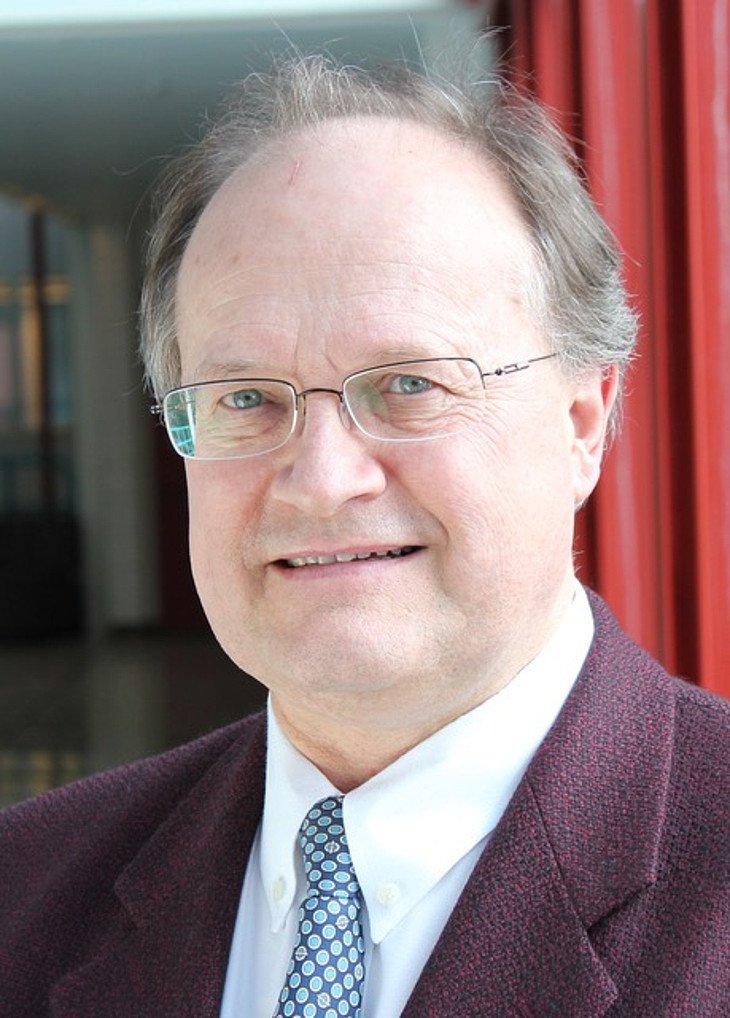
Keynote Speaker: R. G. (Randy) Goebel
R.G. (Randy) Goebel is professor of Computing Science in the Department of Computing Science at the University of Alberta and Fellow and co-founder of the Alberta Machine Intelligence Institute (Amii), one of Canada’s three national AI Institutes. Professor Goebel's theoretical work on abduction, hypothetical reasoning and belief revision is internationally well known; his recent research is focused on the formalization of visualization and explainable artificial intelligence (XAI), especially in applications in autonomous driving, legal reasoning, and precision health. He has worked on optimization, algorithm complexity, systems biology, natural language processing, and automated reasoning. Randy has previously held faculty appointments at the University of Waterloo, University of Tokyo, Multimedia University (Kuala Lumpur), Hokkaido University (Sapporo), visiting researcher engagements at National Institute of Informatics (Tokyo), DFKI (Germany), and the Volkswagen Data Lab (Munich); he is actively involved in collaborative research projects in Canada, Japan, Germany, Austria, the UK, and China.
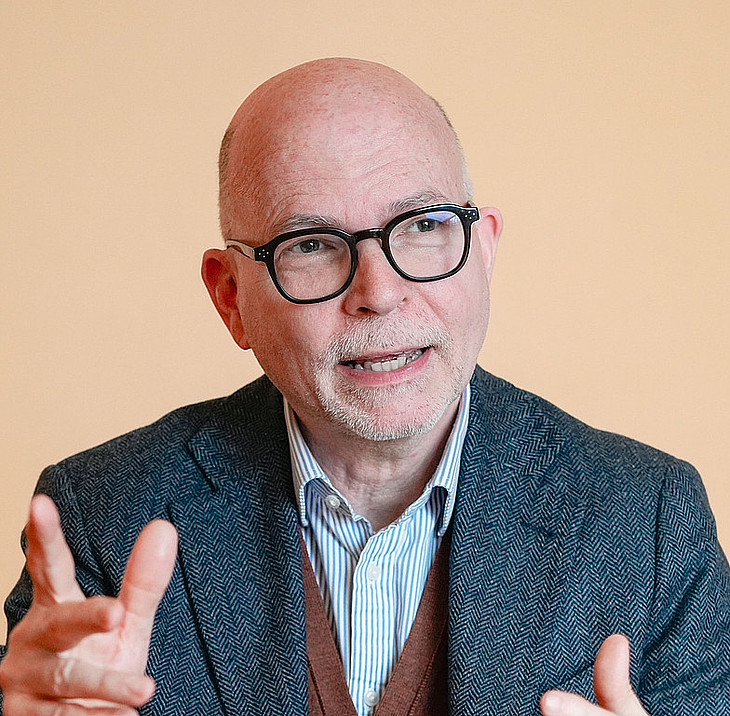
Dinner Speaker: Paul Nemitz
Paul Nemitz is a Visiting Professor of Law at the College of Europe. Until retirement, he was Director in the European Commission for Fundamental Rights and Citizen rights and Principal Advisor on the Digital Transition with broad responsibilities in the triangle between Democracy, the Rule of Law and Technology.
His latest book is “The open future and its enemies – How we can protect free society from AI Dictatorship”. Dietz Verlag, Bonn, 2026 (with Mathias Pfeffer and Jürgen Pfeffer). German Version: “Die offene Zukunft und ihre Feinde – Wie wir die freie Gesellschaft vor der KI-Diktatur bewahren können”. For more see https://open-future.ai/.
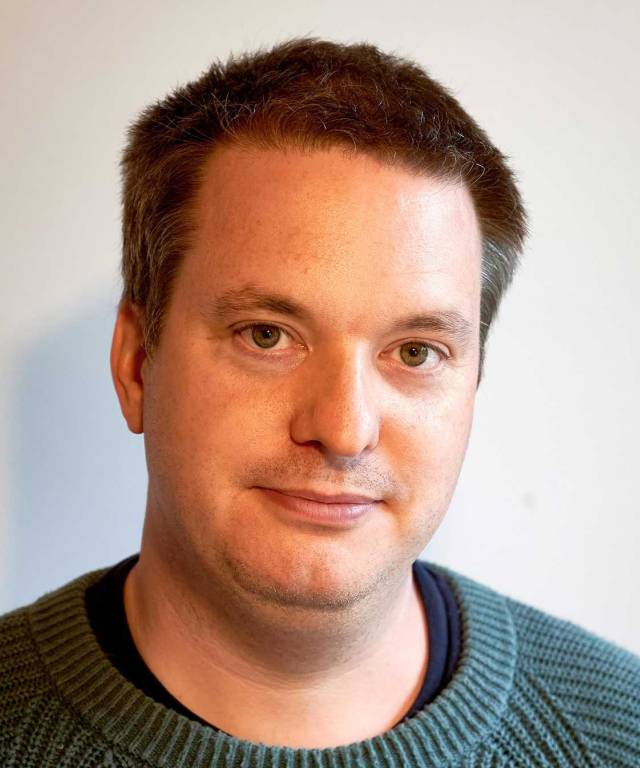
Keynote Speaker: Steven Schockaert
Prof Steven Schockaert is full professor at Cardiff University and fellow of the Alan Turing Institute. He received his PhD from Ghent university and has been a postdoctoral fellow of the Research Foundation Flanders from 2008 to 2011, before joining Cardiff University. His research focuses on Natural Language Processing, Commonsense Reasoning, Representation Learning, and Neurosymbolic Artificial Intelligence. For his research works, Steven has received several awards including the ECCAI Artificial Intelligence Dissertation Award in 2008 and best paper awards. He is editor-in-chief of AI Communications and serves on the editorial board of Machine Learning and Neurosymbolic Artificial Intelligence.
Find the slides of his talk here.
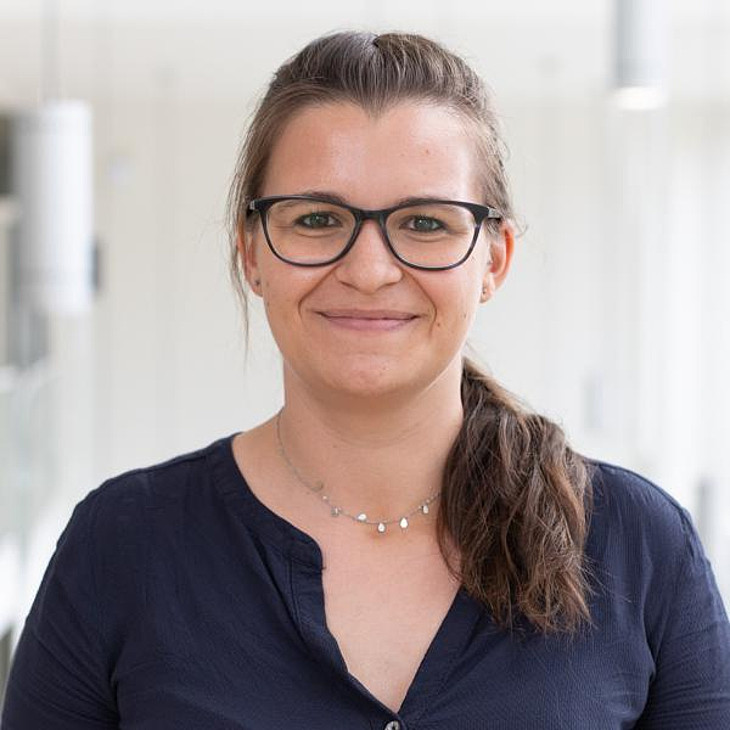
Keynote Speaker: Lea Schönherr
Lea Schönherr is a tenure-track faculty member at the CISPA Helmholtz Center for Information Security, where she has led research in trustworthy AI systems since 2022. She received her PhD from Ruhr University Bochum in 2021 with a dissertation on adversarially robust speech and speaker recognition, supported by the DFG Cluster of Excellence CASA. After her PhD, she was a postdoctoral researcher at Ruhr University Bochum and CISPA, and a visiting researcher at the University of California, Berkeley, and the University of Chicago.
Her research focuses on the security of AI systems, spanning LLMs and agentic pipelines, speech and audio models, code-generating models, synthetic media and deepfake detection, and the human factors involved in AI-driven threats. Her work covers both attacks and defenses, aiming to build AI that is secure, safe, and reliable. Recent projects include safeguards for LLMs, LLM capture-the-flag evaluations, multi-agent negotiation frameworks, benchmarks for insecure code generation, deepfake image and audio detection, and representative studies on how humans perceive AI-generated media. She also critically examines how AI security research itself is conducted, including pitfalls in LLM security evaluation.
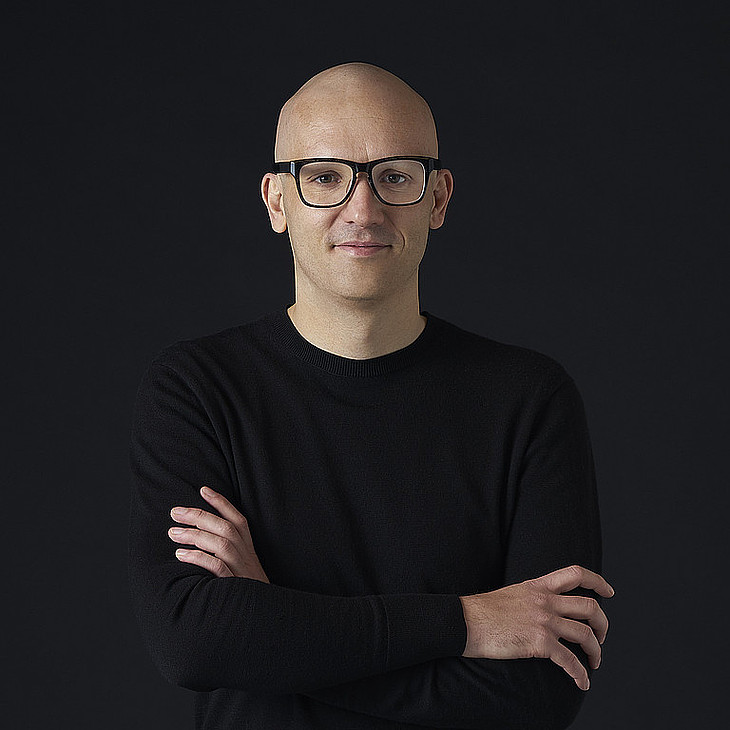
Keynote Speaker: Michael Spranger
Michael Spranger is the Senior Executive Director of Sony Research Inc., a wholly owned subsidiary of Sony Group Corporation established in April 2023, and President of Sony AI, which is a division of Sony Research. He is a roboticist by training with extensive research experience in fields such as natural language processing, robotics, and foundations of Artificial Intelligence. Michael has published more than 100 papers at top AI conferences such as IJCAI, NeurIPS and others. Concurrent to Sony AI, he also holds a Senior Researcher position at Sony Computer Science Laboratories, Inc., and is actively contributing to Sony’s overall AI ethics strategy.